Helios 40-2 85mm f/1.5 lens test
by Georgy Politsarnov and Pavel Molchanov · Gear Tests
As an Amazon Associate I earn from qualifying purchases. Links to Amazon on this page are affiliate links.
Verdict: The Helios 40-2 85mm f/1.5 is a creative portrait lens, and its main value is a unique, unrepeatable rendering, not speed or crisp sharpness. Buy it for artistic portraits and experiments with soft-focus optics. Skip it if you need autofocus, edge-to-edge sharpness wide open, landscapes at infinity, or a lens that renders the same way twice.

What is the Helios 40-2?
The Helios 40-2 is a manual 85mm f/1.5 portrait lens and a true legend, a living one. In 2012 the Krasnogorsk plant restarted production after a long break. After a series of barrel redesigns, you can buy the lens new, in a handsome box and at an attractive price. In this test we show how the legend performs in the hands of professional photographers, note the main traits of the model, and pin down where the Helios 40-2 fits. Photographers Pavel Molchanov and Vlad Shutov helped prepare the test.
The history starts in 1938, before the war. That year Carl Zeiss created the Biotar 1.5/75 lens. Its optical design later became the prototype of the GK-40, the "Helios Krasnogorsky" lens created in 1950.
That lens was later shown at the Brussels exhibition under the name Helios 40-2. It went through improved coatings, which still remain rather "vintage". It changed color from white to black, gained new mounts from M42 to EF and F, and came back on the market as the hero of our test. A path of more than half a century: how many lenses with that kind of lifespan do you know? That is why we call it a living legend.
Helios 40-2 specifications
| Specification | Helios 40-2 |
|---|---|
| Focal length | 85 mm |
| Aperture range | f/1.5 to f/22 |
| Aperture blades | 10 |
| Optical design | 6 elements in 4 groups |
| Angle of view (full frame) | 28° |
| Minimum focus distance | 0.8 m (2.6 ft) |
| Filter thread | 67 mm |
| Size | 82 mm diameter, 92 mm long (3.2 × 3.6 in) |
| Weight | 820 g (1.8 lb) |
| Mounts | Canon EF, Nikon F, M42 |
| Focus | Manual |
| Aperture control | Preset ring with click stops plus a stepless ring |
| Electronics | None: no aperture data in EXIF |
Specifications from the maker's product page, opened 2026-11-23; aperture control and electronics from the test. Imperial values: inches = mm ÷ 25.4, pounds = g ÷ 453.6, feet = m × 3.281. The 28° figure checks out: 2 × arctan(43.3 mm diagonal ÷ (2 × 85 mm)) = 28.6°.
What makes Helios 40-2 bokeh special?
The appeal of this old lens lies in its distinctive, recognizable and unusual rendering of the out-of-focus zone. With an 85 mm focal length and f/1.5, strong background blur is a given. One view holds that the lens was first designed for purely technical work and found its place in artistic photography because of the way it draws.
The Helios 40-2 picture is full of formal flaws, which the designer of this optical masterpiece mixed into a tart and original visual cocktail. Take the swirling highlights in the bokeh. They do not always appear: they show when you focus at roughly 4 to 6 m (13 to 20 ft) and shoot at apertures up to f/4.
This is one of the few lenses whose swirly bokeh works as a harmonious creative tool. A series at different apertures shows how the swirl changes:




The relative hardness of the bokeh highlights and their irregular shape could also count as formal flaws. Sometimes a "fish scale" effect appears, and the scales take different shapes in different parts of the frame. Here is the point, though. Today almost every lens, even a zoom, can boast "correct", soft, slightly cottony blur. Against that, the genuinely unusual bokeh of the Helios 40-2 looks expressive, interesting and fresh.
Another trait is how varied the rendering is. It is hard to predict how the bokeh will fall in a given situation. Will the highlights come out hard or soft? Will the background swirl or not? Focus distance, light direction and the aperture you set all change the character of the blur. With the Helios 40-2 it really is unpredictable, a true lottery. You will not be able to repeat a frame with the same picture.
The swirl window is narrow, and the arithmetic shows why it suits portraits. The swirl shows at focus distances of roughly 4 to 6 m and apertures up to f/4. At those distances the zone of sharp focus at f/1.5 is under half a meter deep, so the subject stays sharp while everything around it turns.
How deep is the focus at f/1.5?
The zone of sharp focus at f/1.5 is thin: 2.6 cm (1.0 in) at a head-and-shoulders distance of 1.5 m. That explains the sudden fall-off described below.
| Focus distance | f/1.5 | f/2.8 | f/4 |
|---|---|---|---|
| 1.5 m (4.9 ft) | 2.6 cm (1.0 in) | 4.9 cm (1.9 in) | 7.1 cm (2.8 in) |
| 2 m (6.6 ft) | 4.8 cm (1.9 in) | 8.9 cm (3.5 in) | 12.7 cm (5.0 in) |
| 3 m (9.8 ft) | 10.9 cm (4.3 in) | 20.4 cm (8.0 in) | 29.1 cm (11.5 in) |
| 5 m (16.4 ft) | 30.6 cm (12.0 in) | 57.3 cm (22.6 in) | 82.2 cm (32.4 in) |
How the numbers were computed: total depth of field on full frame with the standard 0.03 mm circle of confusion. Hyperfocal distance H = f² ÷ (N × c) + f; near limit = s(H − f) ÷ (H + s − 2f); far limit = s(H − f) ÷ (H − s); f = 85 mm, N = f-number, s = focus distance.
The lens has its own plasticity, too, shaped by all of these bokeh traits. The transition from the sharp zone to the blurred zone comes at once, especially wide open. Beyond that, distances between objects dissolve. The Helios 40-2 turns almost any background into a pictorialist painting, where the real distances between objects, and even their shapes, are lost.
How soft is the Helios 40-2 wide open?
Soft by nature. Aberrations are always part of the rendering of optics like this, and here they are far from fully corrected. Spherical aberration is strong: any bright object seems to throw a bright halo and blurs slightly. That aberration explains the soft-focus effect present in almost every Helios 40-2 photo. The effect grows the more you open the aperture and the farther the subject sits from the frame center. You can safely call this a soft-focus lens. For a glow added in editing rather than in the glass, compare the Orton effect.
Chromatic aberration behaves the same way. It shows as bluish and pinkish fringes on the edges of contrasty objects, but spherical aberration dilutes it strongly, even in the focus zone. So it reads less as annoying colored lines and more as a particular creative blur. It also weakens noticeably as you stop down to f/4 or f/5.6.

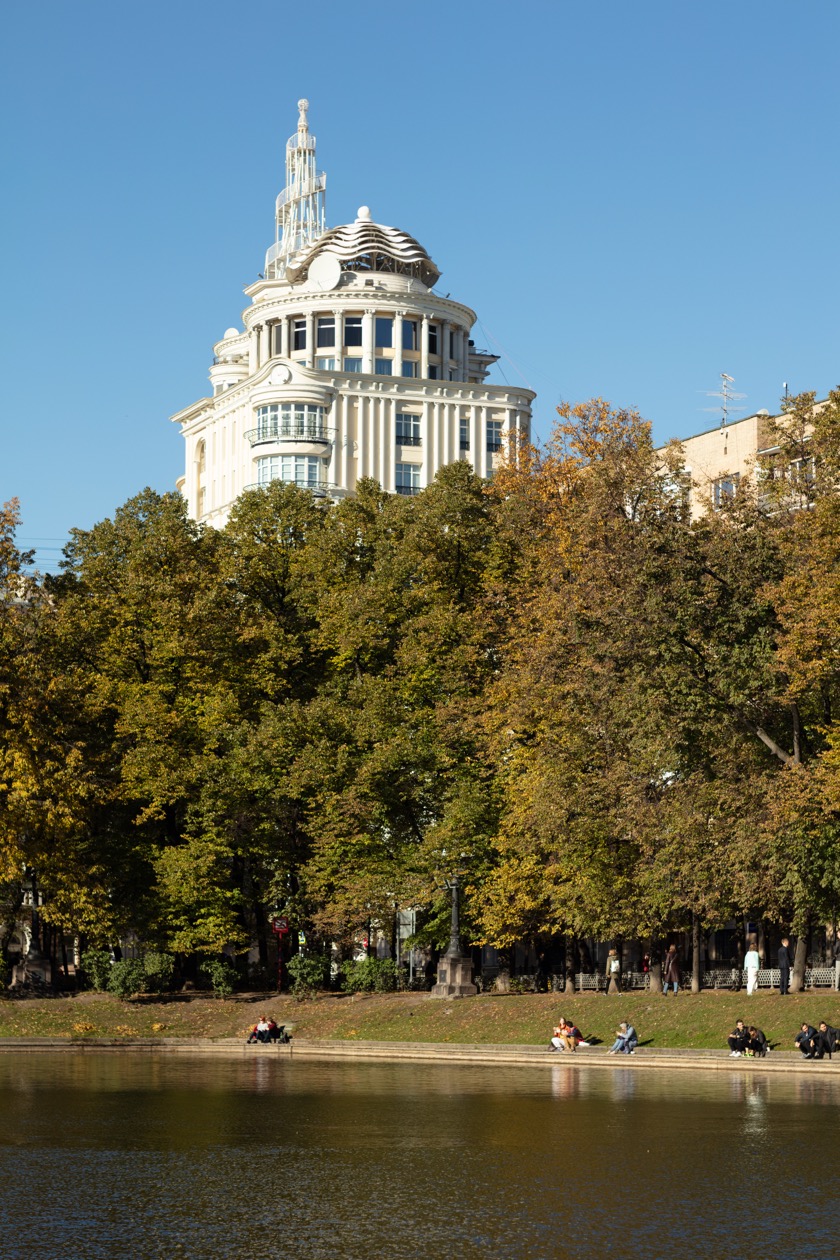
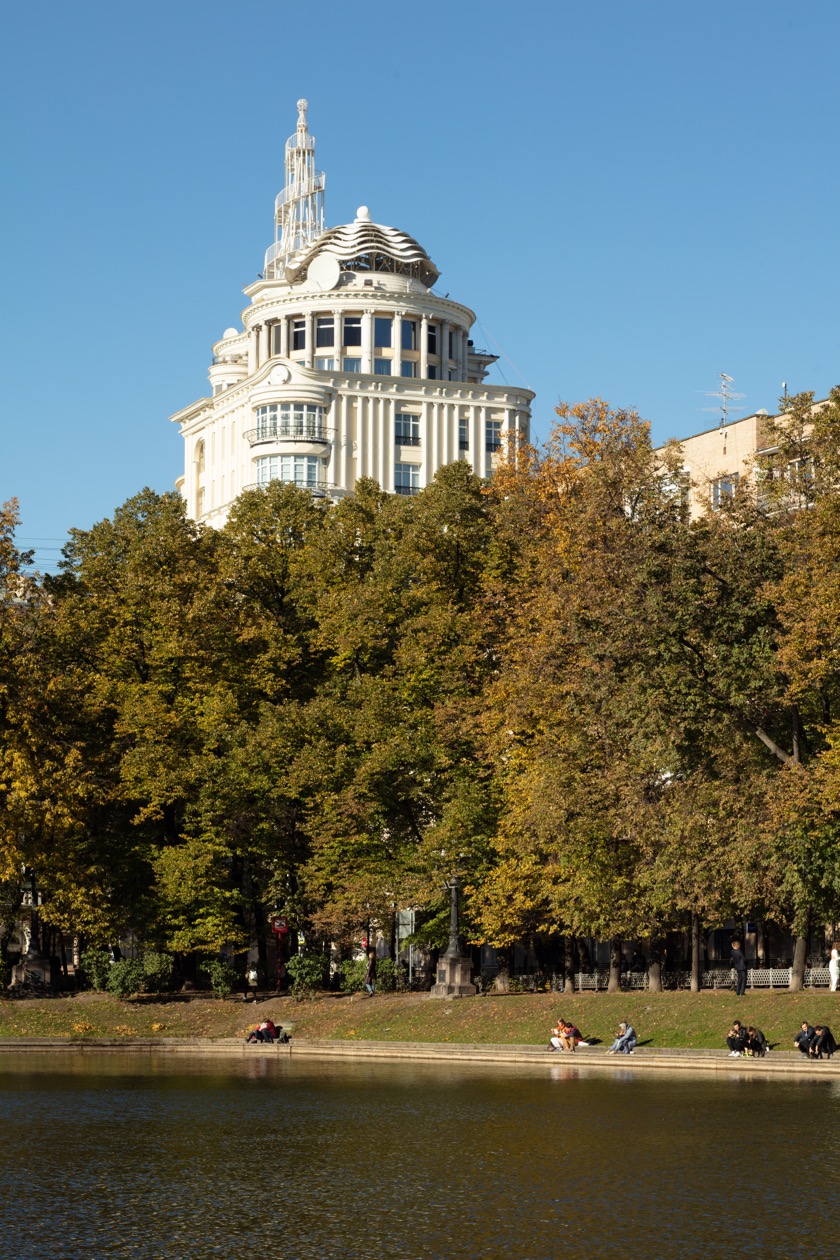
Even the vignetting of the Helios 40-2 differs from familiar lenses. As you close the aperture, it moves like a ring across the frame from center to edge and gradually disappears. We simply note the tendency: the vignetting here is not strong and hardly matters in practice.

How sharp is the Helios 40-2 by aperture?
Sharpness is the hard part. First, recall the year this optical design was developed. The word "megapixel" did not exist even in the nightmares of optical engineers, and today we put this lens on a 50-megapixel camera. Naturally, do not expect pixel-level sharpness. After stopping down, you will still find it in the center of the frame.
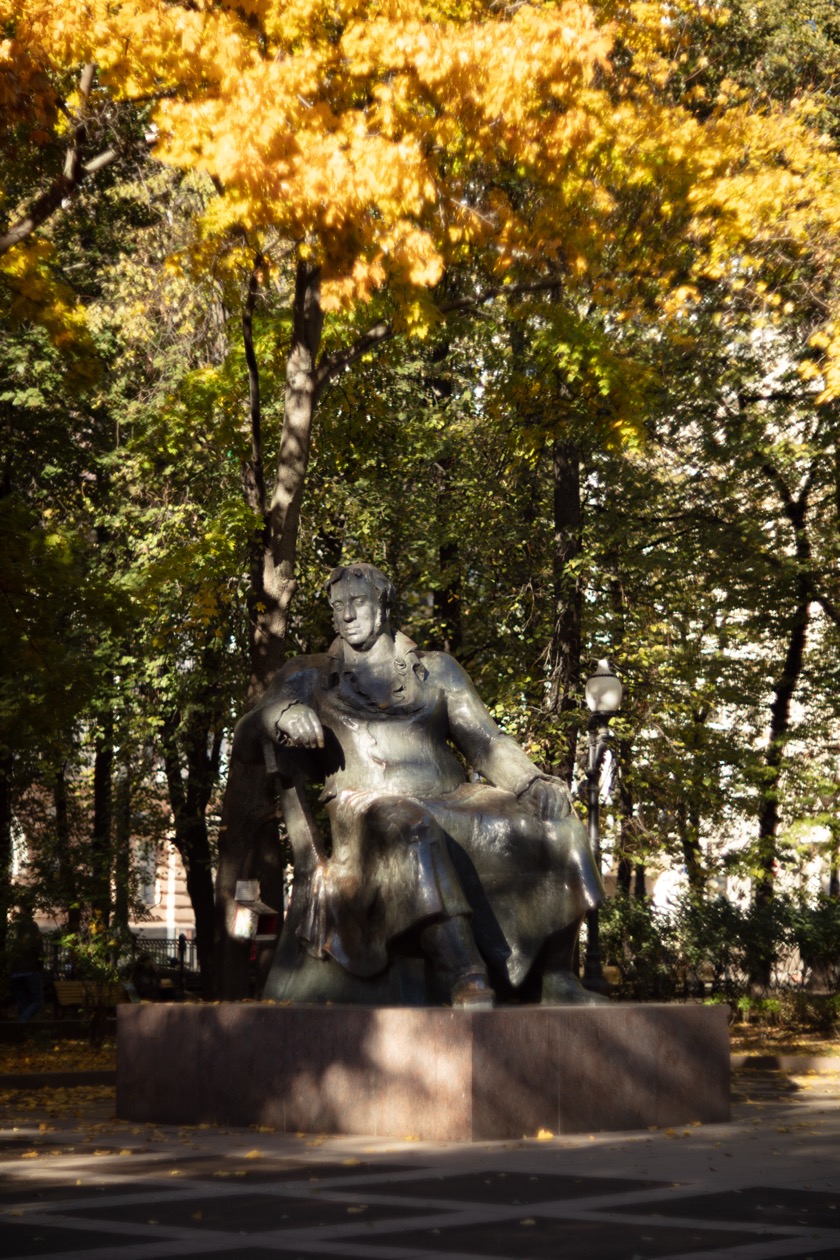
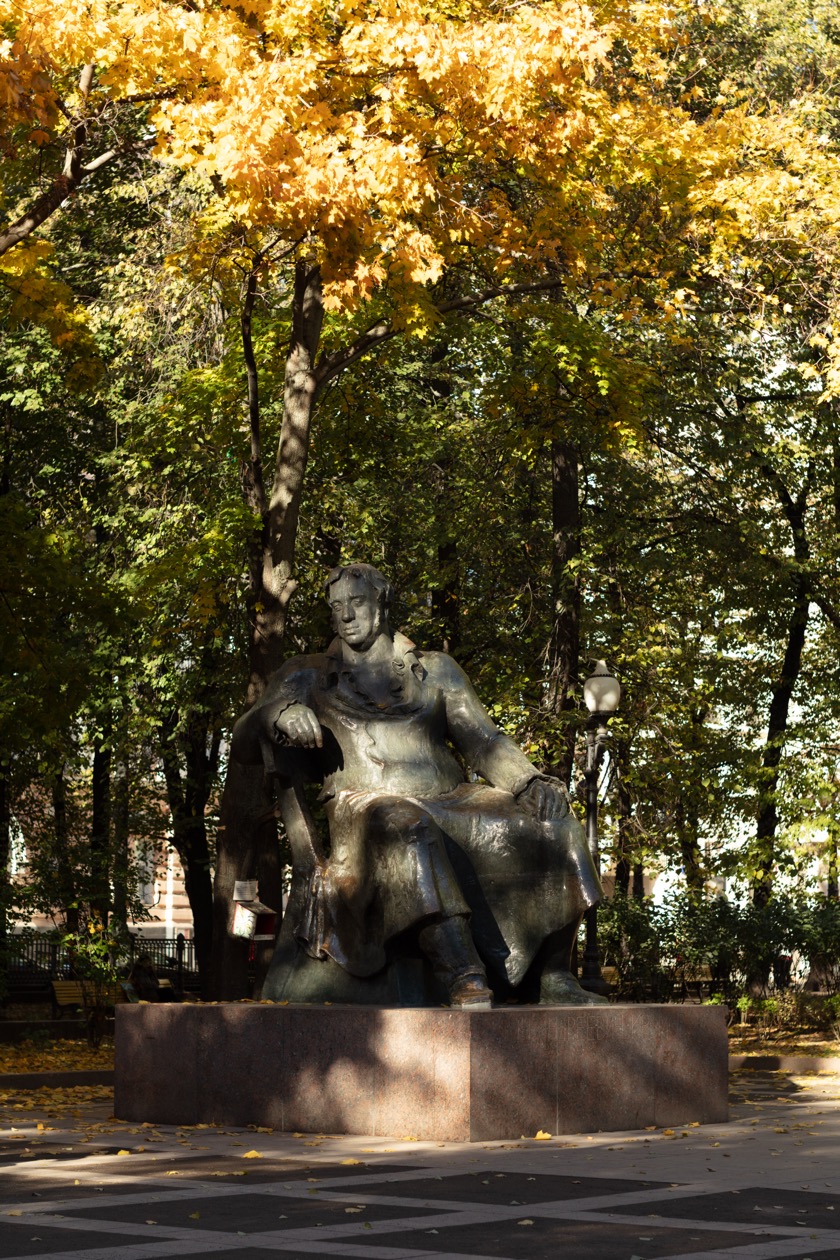
First, sharpness is spread very unevenly across the frame. The crispest image sits near the center. The edges "ring" only after f/5.6. But bokeh is the whole point! So a Helios 40-2 stopped down to f/8 is of no use: the most ordinary modern lens beats it there. Fans of creative optics have to live with the soft effect and the loss of detail at and near full aperture. The good news: in a portrait, that rendering can be well justified.
Second, do not give the lens jobs it was not made for. One view holds that it was built as a purely technical lens, for copying documents and oscilloscope screens. That may explain the strong loss of detail when focusing at long distances. We repeated the sharpness test again and again and never got a good result when focusing far away, close to the hyperfocal distance. At 5 to 10 m (16 to 33 ft), though, the Helios 40-2 can give sharpness acceptable by modern standards: in the center wide open, and at the edges after f/5.6.
Stopping down past f/8 has a cost of its own. Diffraction spreads each point into a blur disk 2 × 1.22 × 0.55 µm × N wide: 10.7 µm at f/8 and 29.5 µm at f/22, against pixels about 4.2 µm wide on a 50-megapixel full-frame sensor. A 3:2 sensor of 50 million pixels is √(50,000,000 × 1.5) = 8,660 pixels wide, and 36 mm ÷ 8,660 = 4.2 µm.
To finish the optics: flare. The Helios 40-2 picks up hardly any flare spots, short of truly extreme light. It handles backlight poorly, though, losing contrast fast and letting in veiling glare. Is that not the effect a lot of photographers chase in post-processing? Count it as one more trait to remember and use as a creative tool.
How do you focus and set the aperture on the Helios 40-2?
The copy we tested is the most current Helios. Its serial number starts with 18, which by Krasnogorsk plant tradition marks the year of manufacture. Its construction therefore differs a little from older versions. Plastic has appeared, trimming the focus ring. It comes from the factory with a Canon mount, and its full name carries the letter "C". A Nikon F version is also made. No M42 adapters are needed anymore.
That is where its fitness for modern cameras ends. The lens has no electronics: only glass, metal, and plastic on the outside. The aperture value is not passed to the camera and is not written to EXIF. The camera does not even know a lens is mounted. So focus confirmation will not work with a number of cameras.
The best focusing tip from the test: shoot bursts while turning the focus ring continuously around the expected point of focus. Every series held usable frames. Focus peaking or a magnifier in Live View beats the optical viewfinder.
Manual focusing with the Helios 40-2 is a challenge. The weakly matted focusing screens of modern DSLRs make sharpness hard to judge in the optical viewfinder. Photographers who focus in Live View with peaking or a focus magnifier have the advantage. Either way, be ready for a lot of misfocused frames. And remember that ringing sharpness is not what to expect from a soft-focus lens.
The burst technique works because the focus ring travel is very long and smooth, as it should be on a lens like this. That also makes the Helios 40-2 usable for video.
The aperture control is unusual. Two rings set it, a design from the days before electronic control and even before the automatic diaphragm. First you set the desired value on the marked ring with click stops. Then you physically close the aperture to that value with the smooth ring. On one hand, you can compose through the viewfinder wide open and close the aperture without looking before the shot. On the other, it can confuse beginners. One thing is certain: videographers will value the smooth, stepless aperture.
The 10 blades also decide how a point of light renders when stopped down. An even blade count gives one diffraction spike per blade, so a streetlamp at f/16 becomes a 10-point star. The sunstar photography page explains the rule.
What changed since this test?
What changed since: Checked on 2026-11-23, the maker sells the lens as the Zenit Helios-40-2 85mm f/1.5 and lists it in Canon EF, Nikon F and M42 mounts, so the M42 version is back alongside the two modern mounts. The product page offers pre-orders and marks the lens out of stock. The optical specification it lists matches the tested lens: 85 mm, f/1.5 to f/22, 6 elements in 4 groups.
Who should buy the Helios 40-2?
The Helios 40-2 is first of all a creative lens. Its main value lies not in speed or ringing sharpness but in a unique, unrepeatable, distinctive rendering. It is a lens with character: manual focus will not let you relax for a second.
The rendering changes with shooting conditions: focus distance, light, and the structure of the background. Two identical frames are very hard to get. Photos can show a soft effect, uneven filling of the highlights, swirly bokeh, and lower contrast in backlight.
Yet all these formal flaws combine surprisingly well and make it a unique portrait lens. Its pictures draw you in and hold your attention, and make you study the frame more closely. It is not like other modern lenses.
We recommend the Helios 40-2 above all for artistic photo sessions and interesting experiments. It suits experienced photographers who want to learn creative work with soft-focus optics, and beginners who want their photos to stand out through unique bokeh. For another route to a dreamy wide-aperture look, the Brenizer method stitches a grid of frames into one.
Pros:
- unique bokeh;
- a soft-focus effect ideal for portraits;
- a fast aperture and strong background blur;
- an affordable price;
- long, smooth focus ring travel;
- a stepless aperture ring;
- mounts for current cameras.
Cons:
- focusing takes effort;
- no electronics;
- relatively low detail at the edges of the frame.
Frequently asked questions
- What is the Helios 40-2 85mm f/1.5 good for?
- Artistic portrait sessions and creative experiments. Its value lies in the unique, unrepeatable rendering of the out-of-focus zone, not in sharpness: swirly bokeh, a soft glow from spherical aberration, and a fast drop from sharp to blurred. It suits experienced photographers learning soft-focus technique and beginners who want their portraits to stand out through unusual bokeh.
- Why does the Helios 40-2 have swirly bokeh?
- The swirl is one of the formal flaws the lens design leaves uncorrected, and it does not appear in every frame. In this test it showed when focusing at roughly 4 to 6 m (13 to 20 ft) and shooting at apertures up to f/4. Focus distance, light direction and aperture all change the character of the blur, so the same frame is almost impossible to repeat.
- Is the Helios 40-2 sharp?
- Sharpness is uneven across the frame. The center is sharpest; the edges become crisp only after f/5.6. From 5 to 10 m (16 to 33 ft) the lens gives acceptable modern sharpness in the center wide open and at the edges after f/5.6. Focused near infinity, it never produced a sharp result in repeated tests. Stopped down to f/8, an ordinary modern lens beats it.
- Which mounts does the Helios 40-2 come in?
- The tested copy was the Canon EF version, marked with the letter C, and a Nikon F version was also made, so no M42 adapter is needed. Checked on 2026-11-23, the maker lists the Zenit Helios-40-2 in Canon EF, Nikon F and M42 mounts. The lens has no electronics, so the camera does not record the aperture in EXIF.
- Helios 40-2 or Jupiter-9?
- This test covered the Helios 40-2 alone, so it cannot rank the two. What it can say: the Helios 40-2 is the faster lens at f/1.5, and its appeal rests on swirly, high-contrast bokeh highlights and a soft glow wide open. Choose it for that look, and only if you accept manual focus and soft edges at wide apertures.
Sources
- Zenit Helios-40-2 85mm f/1.5 lens, specifications, Zenit (2026)
- Diffraction spike, Wikipedia (2026)
- Airy disk, Wikipedia (2026)
Originally published on Prophotos.ru.